Net Zero Ranch was built to close the loop — from regenerative ranchers, to wood fire and the table, and back into living soil. Here's how every gathering leaves no trace.
In nine steps the loop closes. Regenerative ranches and farms grow the food; our crew cooks it over live fire and wood smoke; your guests gather. Every plate and scrap — served on compostable Tabletop — is composted into living soil, sold to Santa Fe gardeners, and grown again.
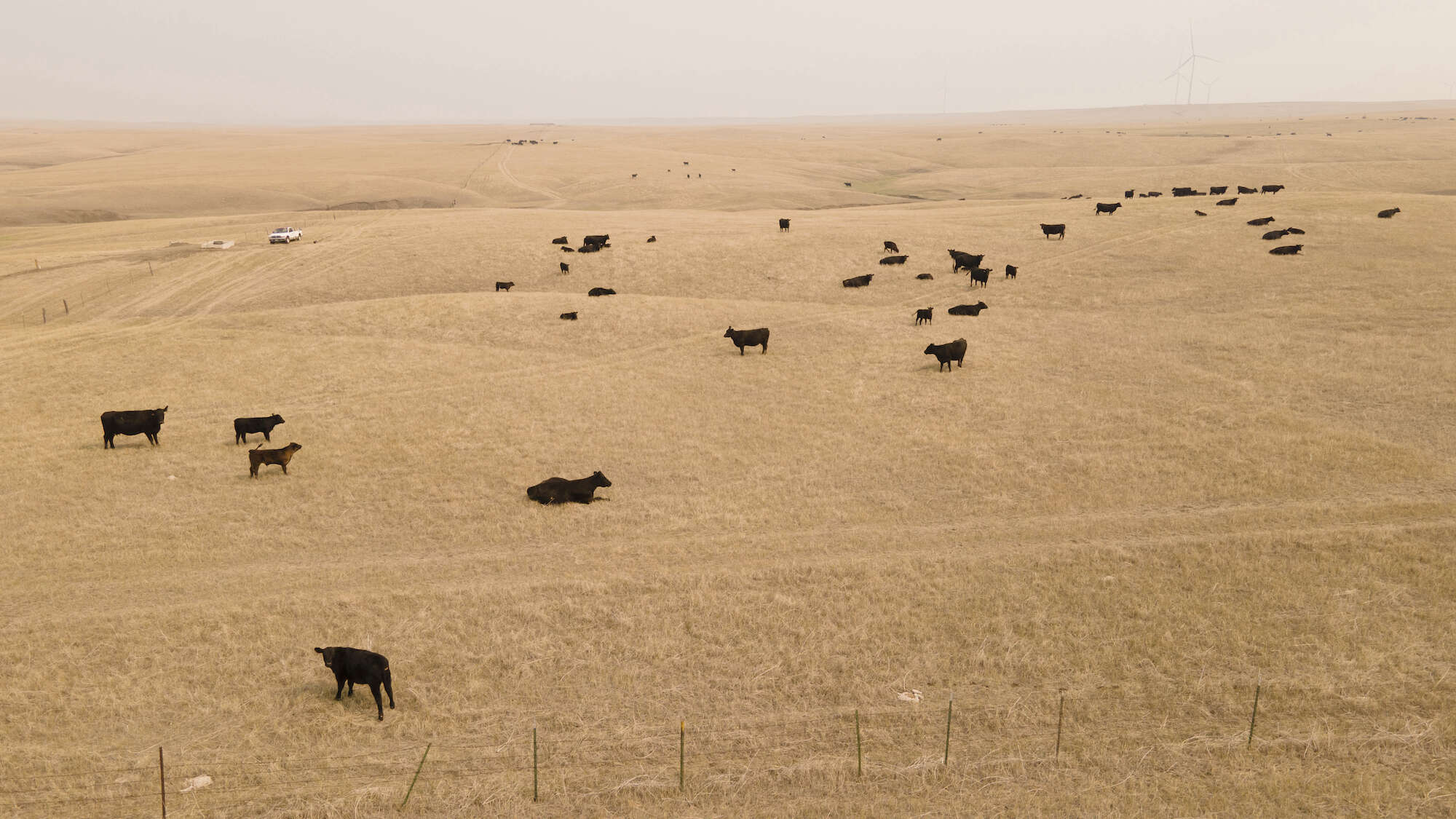
Regenerative ranches and farms across Northern New Mexico grow the food — grazing and growing in ways that rebuild soil rather than deplete it. They are the land's stewards; we source only local beef, lamb, bison, and pork.
Meats are wood-smoked low and slow by our partner, or cooked live on site over open flame — the Asado on wood, oak from Net Zero Ranch itself. Wood is the primary fuel; there are no gas shortcuts.
Our crew shapes the harvest into the meal — the Charro slow-smoked over wood, the Asado cooked live over the coals — passed hand to hand and family-style.
The table gathers. Dinner is served on compostable Tabletop — every plate, cup, and utensil designed to return to the earth, with no plastic shortcuts.
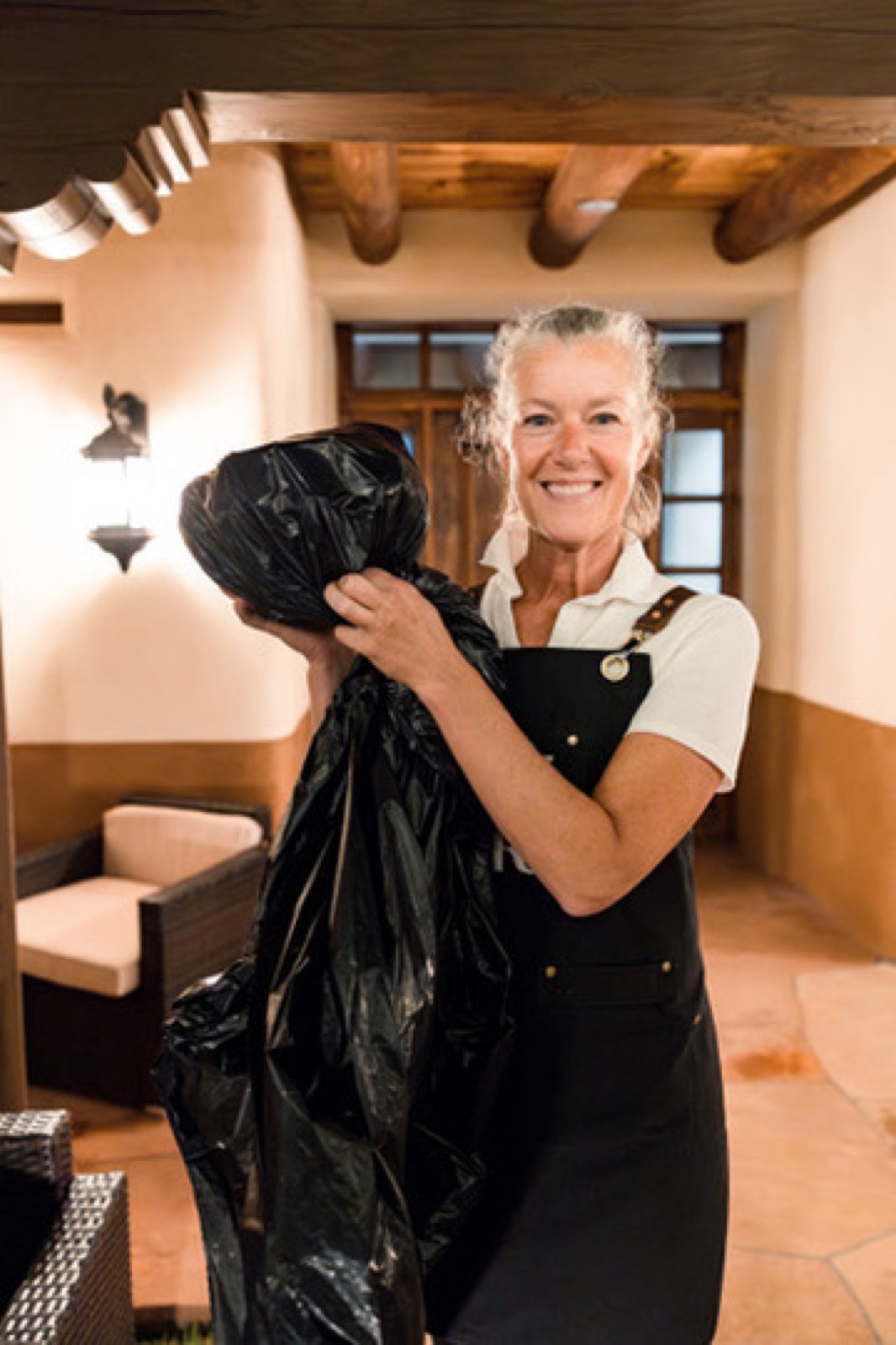
At the close of the night, every plate and every scrap is gathered. A compost bin stands at each event, and recycling bins go up for the venue — nothing is bound for the landfill.
It all travels to Reunity Resources, a soil and fertilizer company in Santa Fe, where plates and scraps break down together into something new.
What was waste becomes living soil — dark, rich, and ready to grow. Carbon that might have warmed the atmosphere can be held in the ground instead.
Santa Fe gardeners buy that soil, carrying the loop out into gardens and beds across the region — a whole community growing from a single celebration.
Gardens bloom, and the harvest begins again. The circle is closed. Soil to soil. No trace.
The gardens feed the farmers, who feed the ranchers, who feed your wedding.
Carbon isn't the enemy — plants feed on it, and it's essential to how food grows. The problem is balance: burning fossil fuels releases far more than the land can absorb, and the excess crowds the atmosphere.
Regenerative ranching and farming restore that balance. Through photosynthesis, plants pull carbon dioxide down into their roots and the soil, where healthy ground holds it for years — shifting farmland from a source of emissions toward a carbon sink.
Less carbon overhead means a steadier climate — less drought, and fewer wildfires like the 2022 Hermit's Peak fire we were born from. When your food comes from farms built this way, your meal treads far lighter on the planet — even helping return carbon to the earth.
of carbon dioxide can be drawn from the atmosphere and stored in each acre of regeneratively farmed soil every year.
The same regenerative ranchers who rebuild soil also restore water. Ground that is covered, rooted, and rich in organic matter drinks the rain in rather than shedding it — soaking up storms, slowing runoff, and letting water settle down to recharge springs and streams instead of racing off dry, bare land.
Grazing managed this way improves the whole water cycle: riparian land comes back to life, banks hold instead of eroding, and thin waterways begin to run again. Healthy soil and healthy water move together — and the ranchers we support tend both.
Net Zero Ranch does not manage the land. The ranchers do. They are the ones on the ground season after season — grazing that rebuilds soil, restoring the waterways, and leaving the next wildfire less to feed on. Our role is to support them.
We do that in the most direct way there is: we buy from them. Sourcing only local beef, lamb, bison, and pork from Northern New Mexico's regenerative ranches sends demand back to the people stewarding the land — and gives them a reason to keep going.
Before the fire, before the table, it starts in the soil. The trilogy of films that defined the regenerative movement, in the order they were released.
Kiss the Ground · 2020 · Watch the Trailer
Common Ground · 2023 · Watch the Trailer
Groundswell · 2026 · Watch the Trailer
The average American wedding generates 400 to 600 pounds of garbage1 and roughly 63 tons of carbon dioxide1. An estimated 10 percent of the food served at weddings is thrown away2, and with more than two million weddings a year in the United States3, the cumulative footprint is enormous — single-use serviceware, transported produce, and landfill disposal at scale. The catering industry has a chance to lead.
Net Zero Ranch is built to invert that math. With roughly 90 percent of ingredients sourced from organic and regenerative ranches and farms in Northern New Mexico, food-mile emissions fall sharply4. Compostable ware plus composting through Reunity Resources diverts nearly all of a wedding's waste from the landfill, cutting the footprint from 400–600 pounds to under five — often two or three5. What can't be composted or recycled is still biodegradable, breaking down in under a year rather than the centuries plastic takes. The cooking fuel is oak harvested at the ranch itself, closing the energy loop.
"When I first started the company, I weighed the landfill waste from every event. An entire wedding — under five pounds. It was a lightbulb moment, how powerful waste-free planning really is."— Kennedy
"We are always learning and refining. It's a constant theme with us."
— Kennedy
Regenerative sourcing, live wood fire, and no trace left behind. Read the full menu by inquiring, or talk it through — no obligation.